
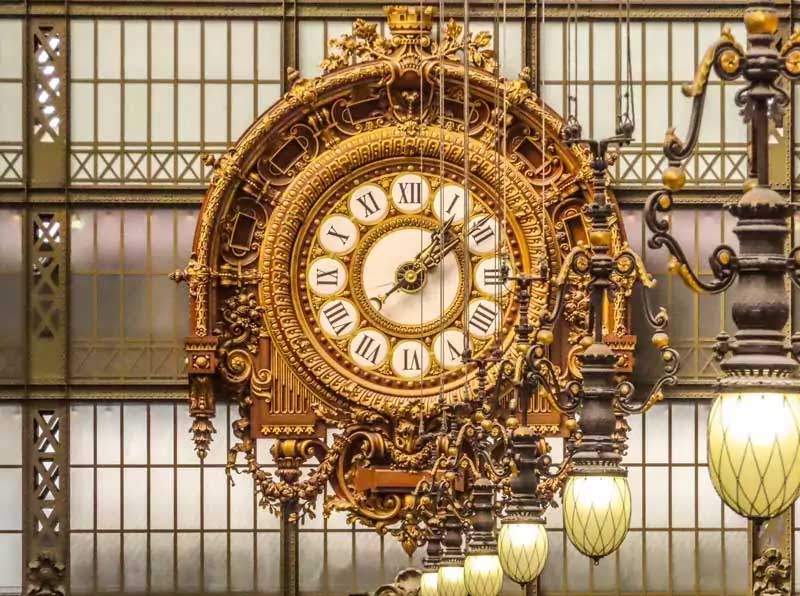
The most famous museum in Paris is the Louvre, but the Musée d’Orsay comes a close second. The most striking feature of this museum is the pair of large clocks you see as you walk by. Standing behind one of these clocks inside the museum gives you a magical view of Paris and the Sacré-Coeur.
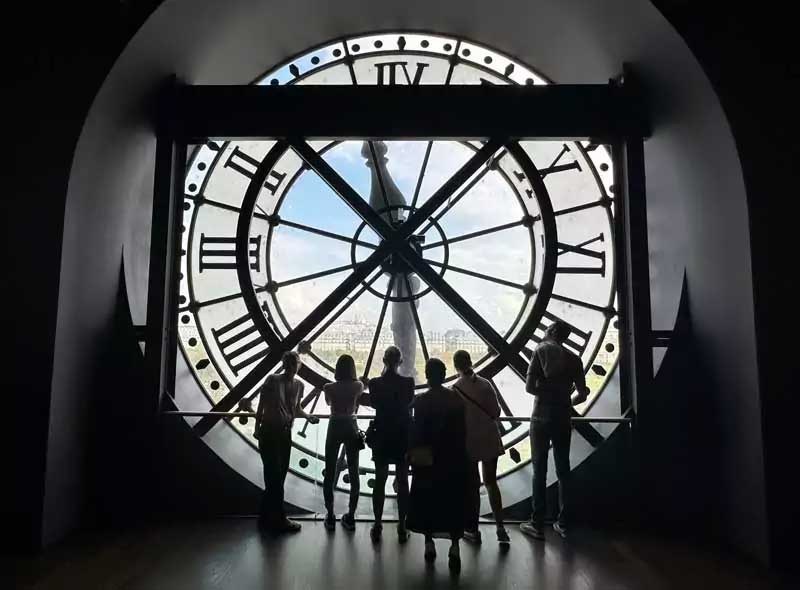
The beautiful clocks, both inside and outside the building, are a reminder of its original purpose as a 19th-century train station, Gare d’Orsay. After years of renovation, the museum opened here in 1986. There is still an RER train station located beneath the building.
The former station, with its impressive clocks and stunning architecture, is a favorite photo spot for visitors of all ages. The museum itself, with works by famous painters and sculptors, is also a major attraction. I personally love that it’s smaller and easier to explore than the Louvre.
In this article, I’ll take you inside the Musée d’Orsay in Paris. I visited in September 2023 and I’m happy to share my experience and some of my own photos to give you an impression of this special place. Of course, the best way to experience it is to go see it for yourself.

I bought my tickets through GetYourGuide. It helps you skip the ticket line. When I visited at noon there wasn’t one, but it was busy inside, so I can imagine there often is. Either way, it was nice to walk straight in after showing my ticket on my phone.
When you enter the museum, the first thing you see is the vast central hall. From the entrance level, you overlook this impressive space from above (see the photo below).
Many people stop here for a moment or sit down on one of the benches to decide where to start. You can also grab a map. It looks huge at first, but it’s not as big as it seems. The museum actually has three main levels: 0, 2, and 5. On the top floor (level 5), you can go in two directions. There are two galleries with paintings by famous artists, a restaurant (next to one of the two clocks), and another clock room where you can take beautiful photos.
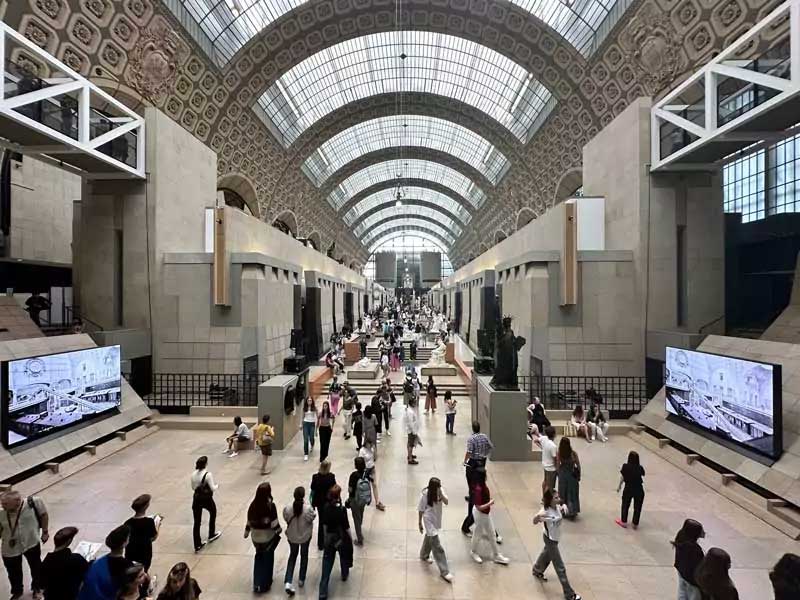
The second floor has several galleries with paintings and sculptures. From here, you can look down into the grand hall below. There’s also another restaurant on this level. On the right, you’ll find smaller rooms with paintings. On the opposite side, there are larger, elegant exhibition halls like the one in the photo below.
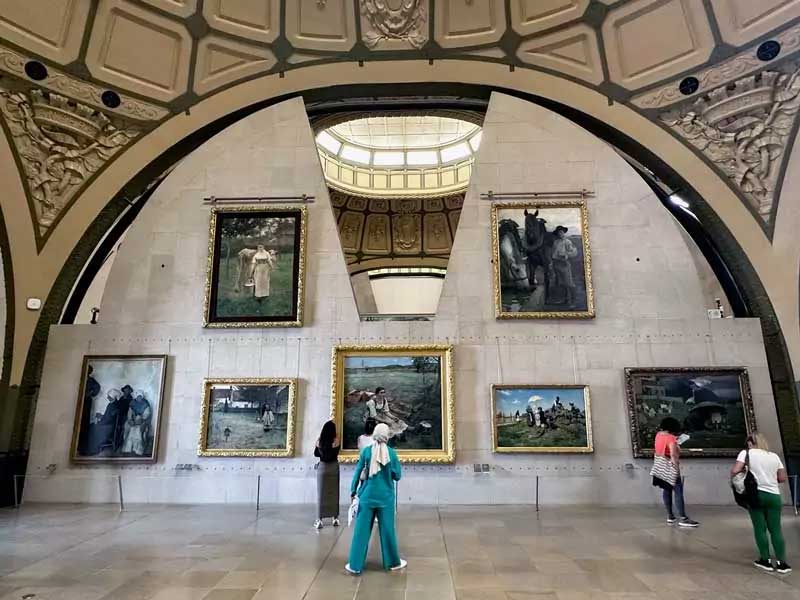
Art gallery inside the Musée d’Orsay in Paris featuring Impressionist paintings.
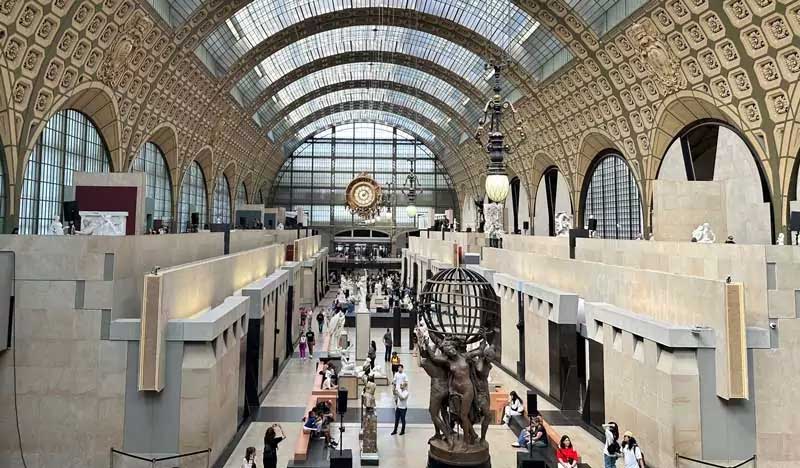
The ground floor (level 0) is the same impressive hall you see when you enter. Along the sides, you’ll find smaller rooms with more art and temporary exhibitions. The famous old station clock is also located here, as shown below.
Download the floor plan of Musée d’Orsay (PDF – 2023).
I started on the fifth floor and worked my way down. That turned out to be a great choice, as the top floor deserves extra time for its famous paintings. The lower levels can feel a bit overwhelming because of the size and number of rooms.
Famous artists featured at Musée d’Orsay:
- Monet
- Degas
- Renoir
- Van Gogh
- Sisley
- Gauguin
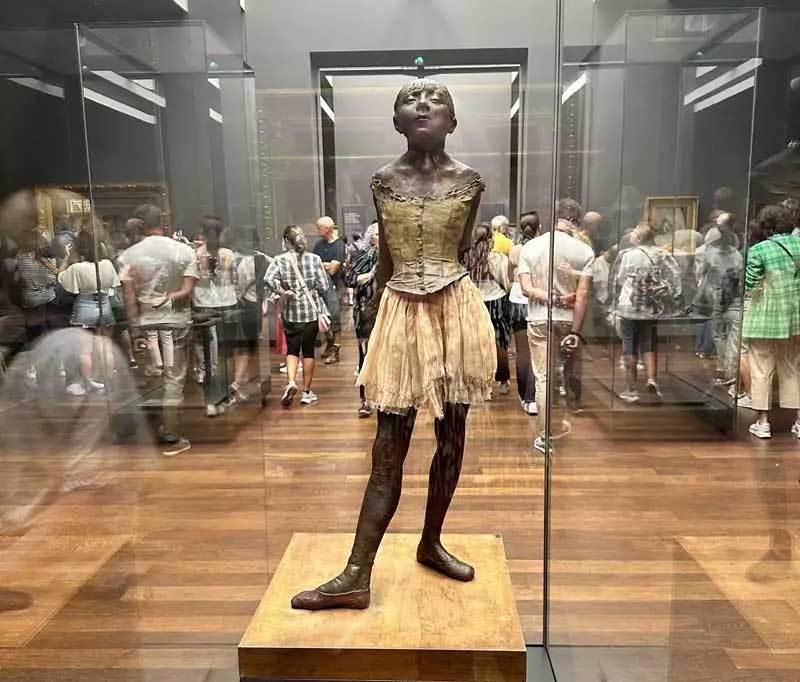
You’ll also find beautiful sculptures, including works by Rodin and Degas. The museum focuses on the period between 1848 and 1914, especially the Impressionist movement.
Book your tickets for Musée d’Orsay here
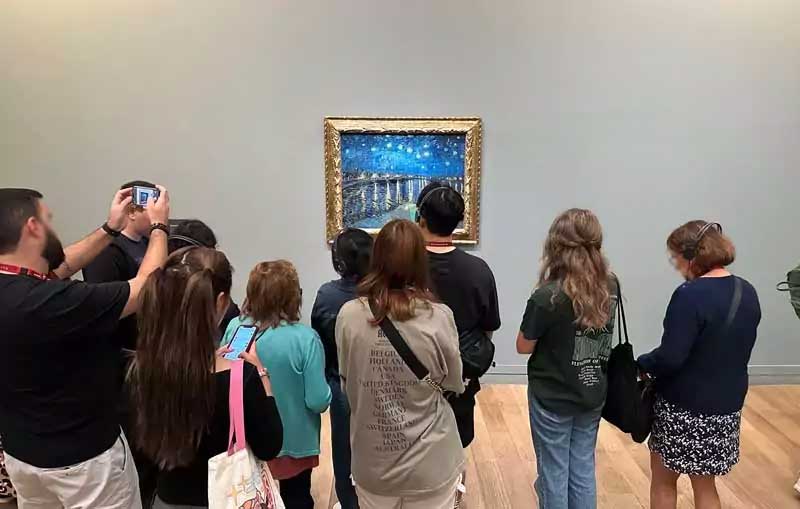
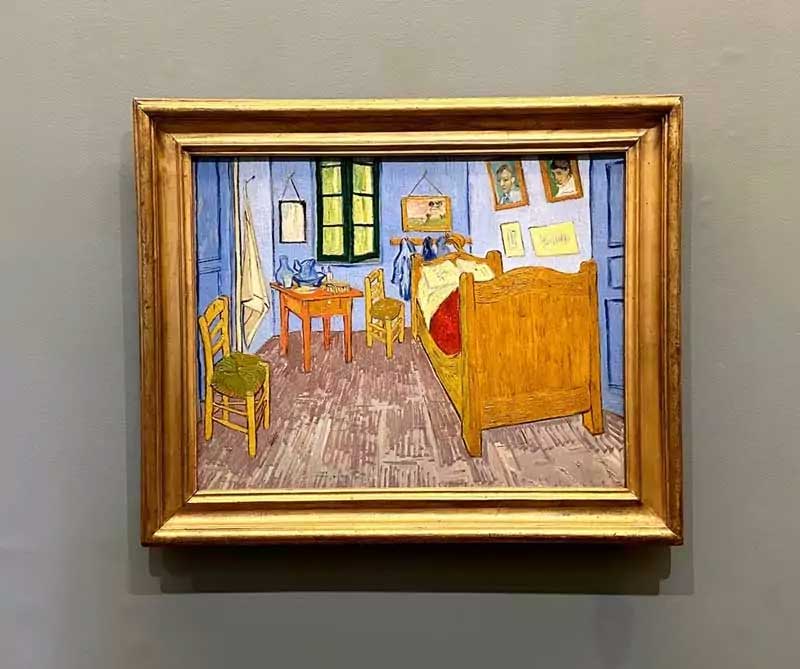
Vincent van Gogh at Musée d’Orsay
Musée d’Orsay houses several important works by Vincent van Gogh, including Starry Night Over the Rhône (1888), The Bedroom, and several self-portraits.
Claude Monet at Musée d’Orsay
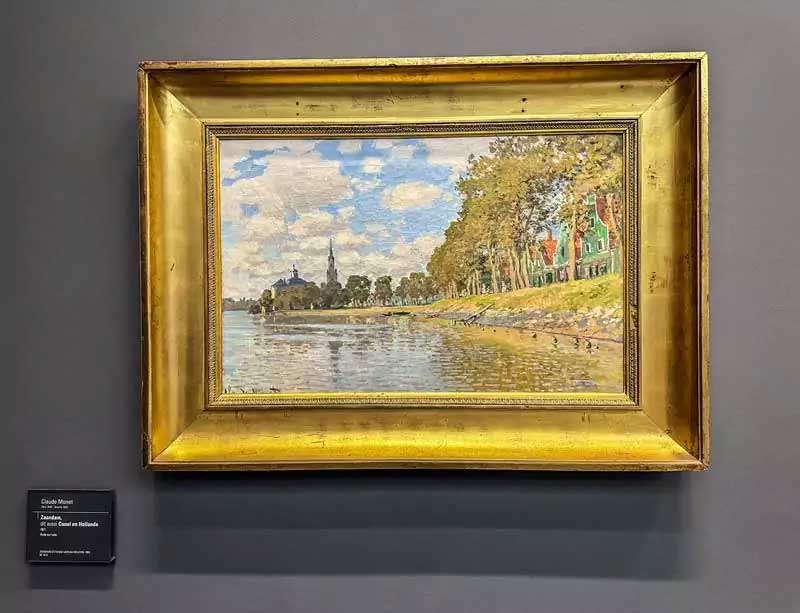
There are many paintings by Claude Monet on display, including one he painted in the Zaan region of the Netherlands, showing the River Zaan and typical Dutch houses.
Important works by Monet at Musée d’Orsay include:
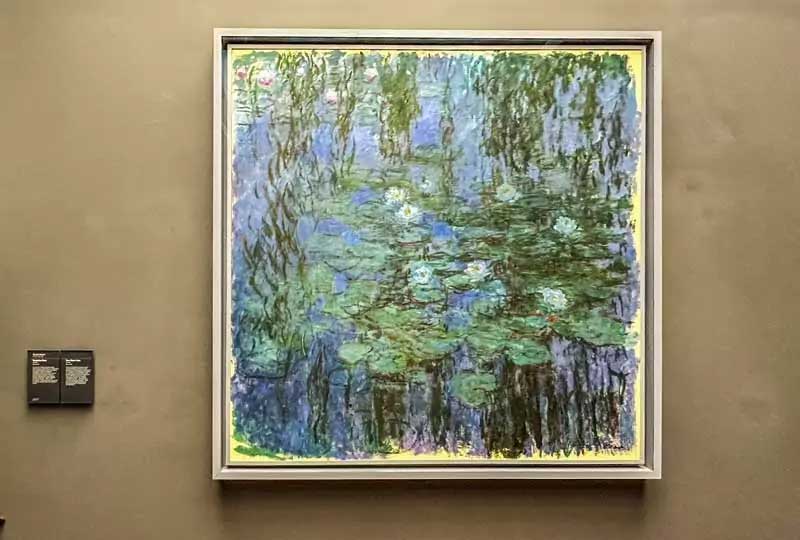
- Nymphéas Bleus (Blue Water Lilies, part of his famous series)
- Londres, le Parlement
- Rue Montorgueil, à Paris
- Gare Saint-Lazare
- Cathedral of Rouen
- Coquelicots
Practical information about Musée d’Orsay
How much time do you need?
If you plan to walk through the museum without spending too much time studying each piece, about 1.5 to 2 hours is enough. If you love art and want to take your time, plan for 4 to 5 hours, including a lunch break at one of the restaurants.
Can I bring my bag?
Yes, small handbags are allowed. Larger bags (but not suitcases) can be stored in lockers near the entrance during your visit.
Can I take photos?
Yes, but flash, lamps, tripods, and selfie sticks are not allowed. Photos are for personal use only and cannot be used commercially. You can share them on social media.
Are audio guides available in English?
Yes, you can rent an audio guide in French, German, English, Chinese, Korean, Spanish, Italian, Japanese, Portuguese, or Russian. Dutch is not available. There’s an extra charge for the audio guide, but you can also explore the museum without one.
Can I visit with a guide?
Yes, you can book a guided tour in English here.
Accessibility
- The museum is wheelchair accessible.
- Wheelchairs and folding chairs are available at the entrance (no reservation needed).
- Guide dogs are welcome.
- For visitors who are deaf or hard of hearing, an induction loop system is available.
- Special audio guides are available upon request.
- Visitors with visual impairments can bring a companion who enters for free.
- Optical aids are allowed but must be mentioned to the staff.
- Some audio guide content is available in audio description.
- Through a partnership with Souffleurs de Sens, blind or visually impaired visitors can explore the museum with the Souffleurs d’Images program. Reservations are required at least 15 days in advance.
Is the museum fun for kids?
Children under about 10 might not find it very engaging, but older kids who already know a bit about art will enjoy it more. Teenagers especially love taking photos near the big clock (see the first photo).
Admission is free for children under 18 and for EU residents under 26 with a valid ID.