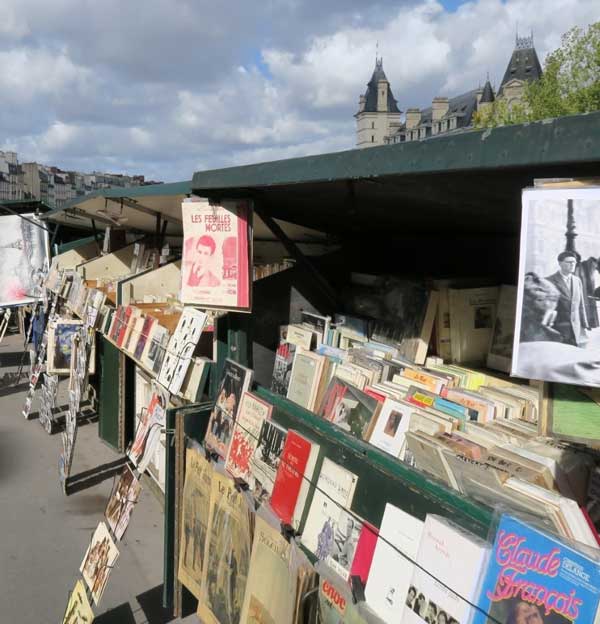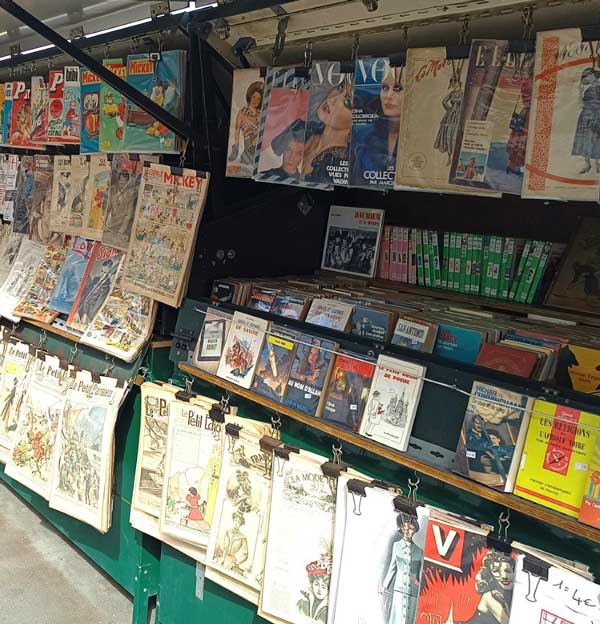
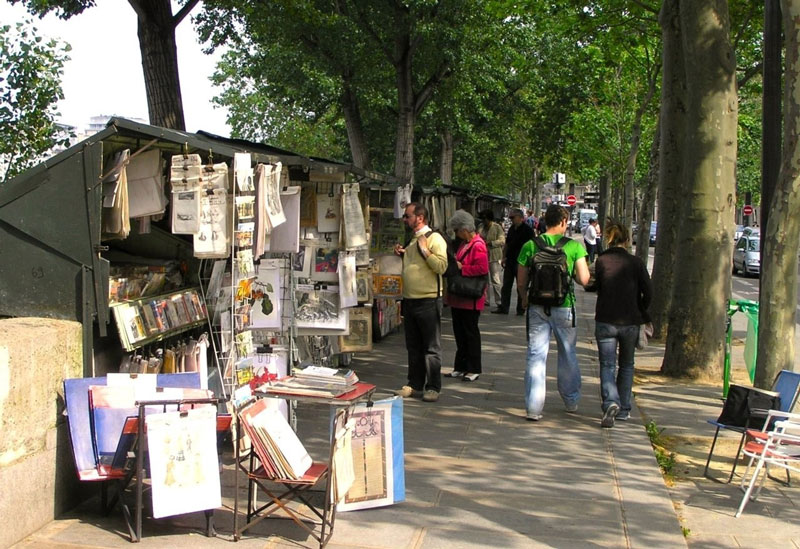
Anyone strolling along the banks of the Seine near Notre-Dame will spot them immediately: the bouquinistes, sellers of old, second-hand and vintage books. From their iconic green boxes, attached to the stone walls along the river, they sell not only literary works, but also rare magazines, old maps, prints and posters.
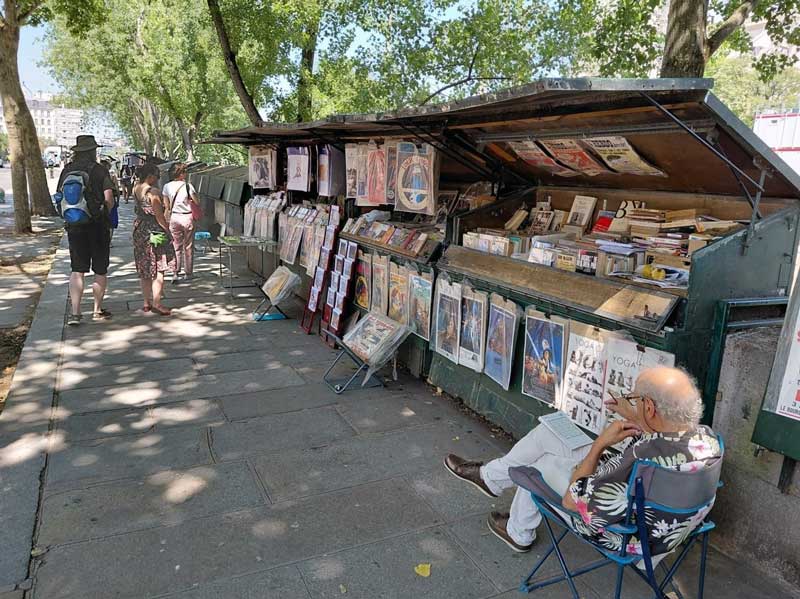
For collectors, this is the perfect place to hunt for a special and often surprisingly affordable item that is still missing from their collection. But it is also a lovely stop for tourists. Walking past the colorful bookstalls is a truly Parisian experience. And who knows, you might even find an original souvenir to take home.
The bouquinistes, typically Paris
There are many of them. Really many. You will find bouquinistes on the Left Bank between Pont Royal and Pont de la Tournelle, and on the Right Bank between Pont Neuf and Pont Marie. They are not always all open. That depends on the season and the weather. It is rare, however, that they are all closed at the same time. Book sellers are required to open their green boxes at least four days a week, unless weather conditions make that impossible.
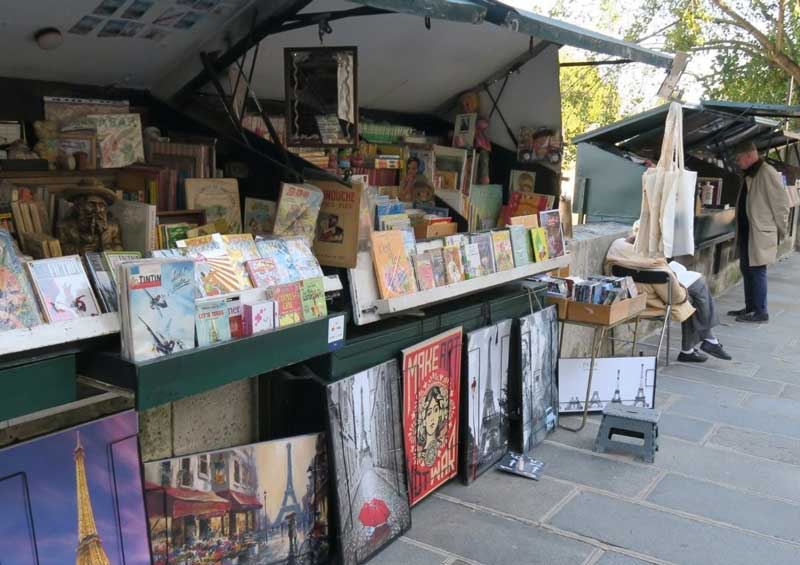
As in many popular areas of Paris, you will sometimes see street artists working nearby. Making jewelry or painting small artworks. I always enjoy that.
Spread along roughly three kilometers of riverbanks, around 200 bouquinistes manage about 900 green boxes, containing more than 300,000 books. You do not need to browse every single stall. Many look quite similar. Still, this is such a classic Parisian sight that it really should not be missed during your visit. Many of the sellers are passionate book lovers themselves, so it is often fun to strike up a conversation if something catches your eye.
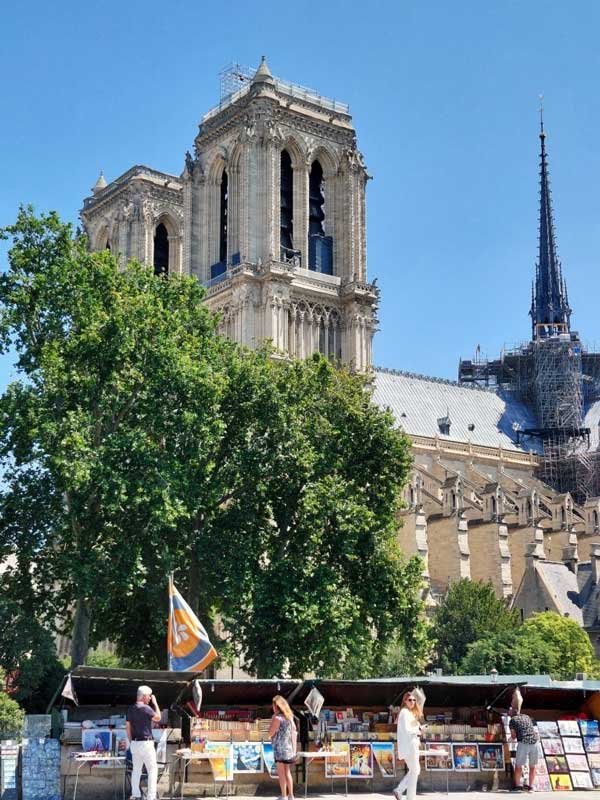
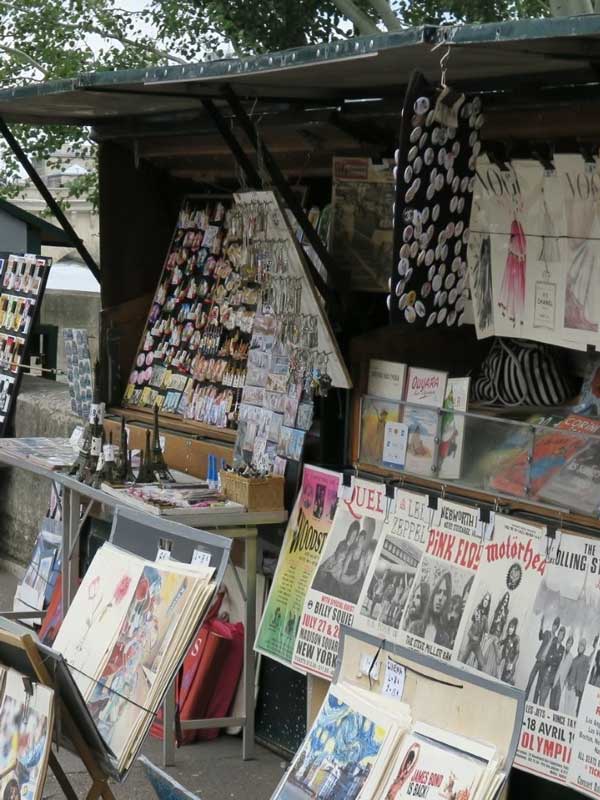
And honestly, the photogenic setting along the Seine, close to Notre-Dame and the Latin Quarter near Saint-Michel metro station, is reason enough to add this walk to your itinerary.
Location of the bouquinistes
- Right Bank: from Pont Marie to Pont des Arts, along Quai de l’Hôtel de Ville and Quai du Louvre.
- Left Bank: from Pont Sully to Pont Royal, along Quai de la Tournelle and Quai Voltaire.
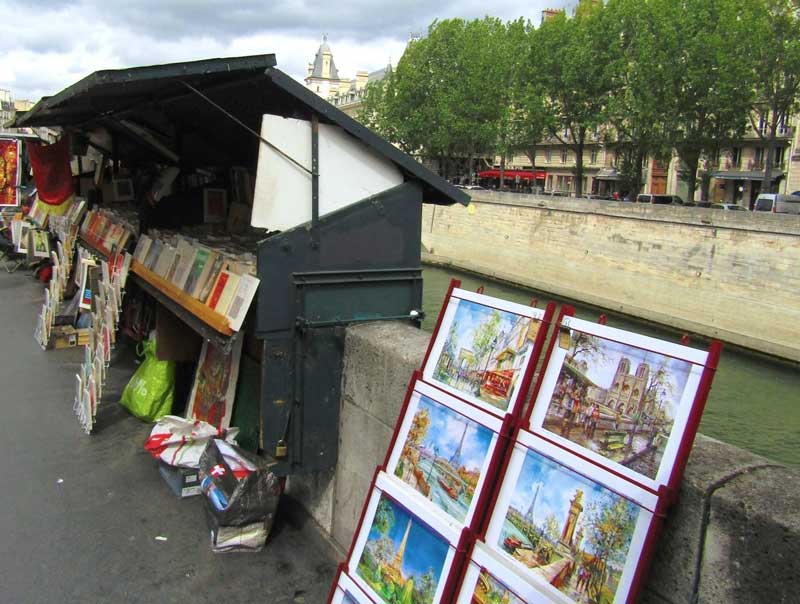
The bouquinistes in modern times
Although the bouquinistes have been an almost unchanged presence along the Seine for nearly a century, the last ten to fifteen years have brought noticeable changes. Due to digitalization and the unlimited availability of information online, younger generations tend to collect fewer physical books.
Many bouquinistes now have their own websites to reach a wider audience. At the same time, they need to earn a living. That is why you will see more souvenirs at the stalls today, such as Paris prints, magnets and small bronze-colored Eiffel Towers. The City of Paris strictly monitors this. The main focus must remain on old and second-hand books, historical documents, antique maps and engravings.
The Covid years were extremely difficult for many sellers. There was also major controversy ahead of the 2024 Olympic Games, when plans were announced to remove up to 50 percent of the green bookstalls. After protests from Parisians and the booksellers themselves, President Macron decided that the bouquinistes could stay.
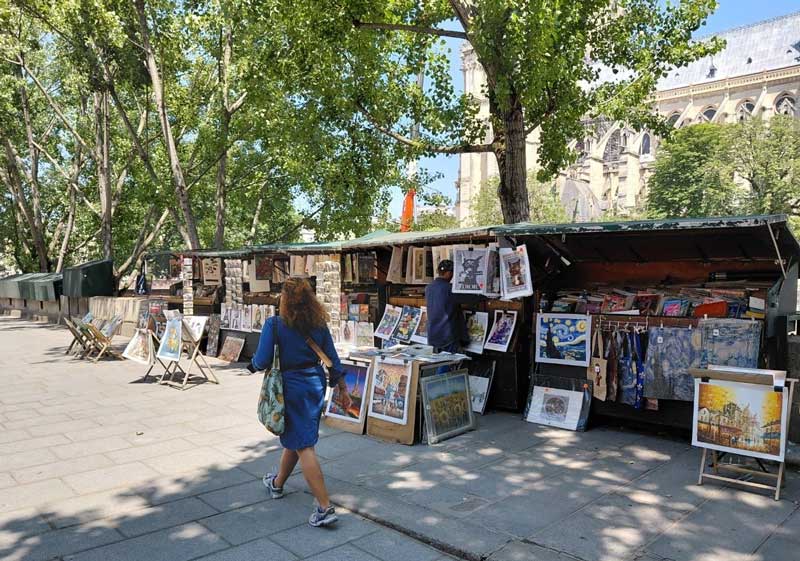
Around the riverbanks
If you are in Paris, plan your visit on a beautiful day, preferably when the sun is shining. More bouquinistes will be open, and the atmosphere is simply more cheerful. It is one of those moments when you feel you have truly experienced a unique and authentic part of Paris. And captured it on camera.
This walk is easy to combine with other highlights such as Notre-Dame and a short stroll across the elegant Île Saint-Louis.
With thanks to Louis Vendel for this article and the photos.
FAQ and Practical Tips for Visiting the Bouquinistes in Paris
Planning a stroll along the Seine to see the famous bouquinistes. Here are the questions American travelers ask most often, plus practical tips to help you make the most of your visit.
FAQ: Bouquinistes in Paris
Can I buy books in English from the bouquinistes?
Yes, sometimes. Many stalls focus on French books, but you will regularly spot English titles, especially classics, art books, and older travel books. If you are specifically looking for English books, browse a few stalls in a row and ask the seller. Some bouquinistes know exactly which neighbor has a larger English selection.
What do prices usually look like?
Prices vary a lot. You might find inexpensive paperbacks, old postcards, or small prints for just a few euros. Rare books, first editions, antique maps, and authentic engravings can cost much more. A good tip is to set a budget before you start browsing, because it is very easy to fall in love with something unexpected.
Do the bouquinistes accept credit cards?
Some do, but many still prefer cash. It is smart to bring a bit of cash in small bills, just in case. If you only have a card, look for a small sign that mentions card payment, or simply ask politely before you choose your item.
Are the bouquinistes open every day?
Not always. Opening days and hours depend on the season and the weather. On rainy or very windy days, more stalls will be closed. On sunny afternoons and weekends, you will usually see the highest number of open stalls.
Are the bouquinistes part of UNESCO World Heritage?
The riverbanks of the Seine in central Paris were added to the UNESCO World Heritage List in 1991. The bouquinistes themselves are not officially recognized by UNESCO at this time. However, they are protected as French cultural heritage, and many Parisians hope that their unique bookstalls will eventually be included as part of this recognition in the future.
What is the best time of day to visit?
Late morning through mid-afternoon is usually ideal. You get better light for photos, and more sellers tend to be open. If you want fewer crowds, go on a weekday. If you want the liveliest atmosphere, go on a sunny weekend afternoon.
Are the items authentic or reproductions?
Both. Many stalls sell authentic vintage items like old books, antique maps, and true engravings. At the same time, you will also see reproductions and souvenirs. If authenticity matters to you, ask the seller whether the piece is an original, what period it is from, and whether it is a reproduction. Most sellers are happy to explain.
Practical Tips for Your Walk Along the Seine
Go when the weather is nice.
This sounds obvious, but it makes a huge difference. The bouquinistes are more likely to be open, and the Seine simply looks magical in good light.
Pair it with Notre-Dame and Île Saint-Louis.
This is an easy win for your itinerary. Start near Notre-Dame, walk a stretch of the Seine, then cross over to Île Saint-Louis for a quiet, elegant break from the busier areas.
Bring a tote bag or a sturdy folder.
If you buy prints, posters, or vintage paper items, you will want something to protect them from bending. A tote bag plus a flat folder works perfectly.
Carry small cash and keep your receipt if you get one.
Cash is helpful, and if a seller offers a receipt for a higher-priced item, it is worth taking, especially for antiques or collectible pieces.
Ask questions.
Many bouquinistes are true book lovers. If you see something interesting, ask about the story behind it. It is one of the most authentic interactions you can have in Paris.
Watch your belongings.
This is a popular tourist area, so keep your phone and wallet secure, especially in crowds near bridges and major sights.
Take your time.
Do not try to “do them all.” Choose a stretch, browse slowly, and enjoy the feeling of discovering a small piece of Paris that has been part of daily life for generations.