
Few European cities are as instantly recognizable as Paris. World-famous landmarks like the Eiffel Tower, Notre-Dame, and the Arc de Triomphe define the skyline, while the Paris Métro, the Louvre Museum, and the city’s elegant department stores add to its unmistakable character.
Add the grand boulevards lined with shops and sidewalk cafés, along with romantic side streets full of cozy bistros, and you have all the ingredients for a perfect city break.
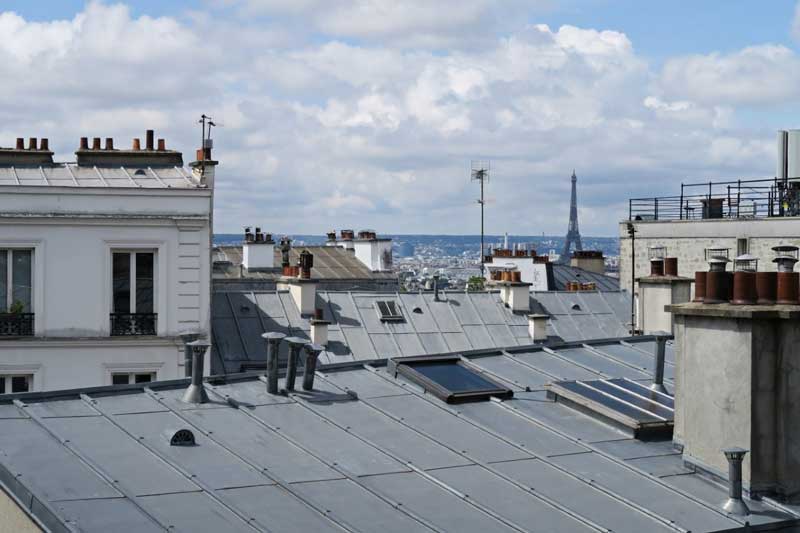
But Paris has another defining feature that often goes unnoticed at street level: the iconic zinc rooftops. These rooftops are an essential part of the city’s identity. In this article, you’ll discover why.
Baron Haussmann and the Transformation of Paris
In the first half of the 19th century, Paris was a maze of narrow streets filled with small, damp homes, poor sanitation, and unsafe drinking water. Traffic consisting of carts and horses could barely move, and the overcrowded neighborhoods were also a breeding ground for unrest and rebellion. At the same time, plans were emerging for modern public transportation, including early steam trams.
This situation was unsustainable. Emperor Napoleon III appointed Baron Georges-Eugène Haussmann to radically redesign Paris. Haussmann introduced wide boulevards and grand avenues, along with a completely new and modern sewer system.
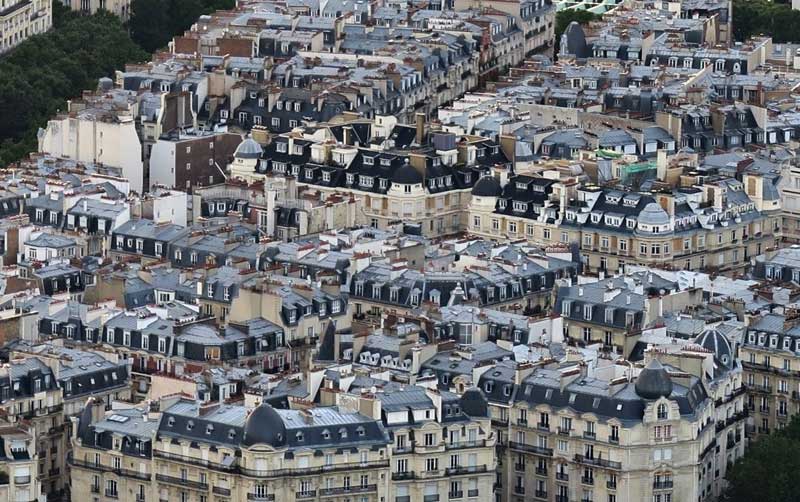
Haussmann was also responsible for creating large green spaces such as the Bois de Boulogne and Parc des Buttes-Chaumont. Construction began in 1853, and during this period the distinctive residential buildings were constructed that we now recognize as classic Haussmann-style architecture.
Seeing Paris from Above
Unlike many other major European cities, low-altitude flights over Paris are prohibited during takeoff and landing. As a result, you can’t admire the city from the air in the usual way.
Fortunately, there are plenty of other places where you can enjoy spectacular views. Think of the Tour Montparnasse with its 58 floors, the steps and terraces around Sacré-Cœur in Montmartre, the rooftop of the Arc de Triomphe, and the panoramic terraces of the Galeries Lafayette and Printemps department stores on Boulevard Haussmann.
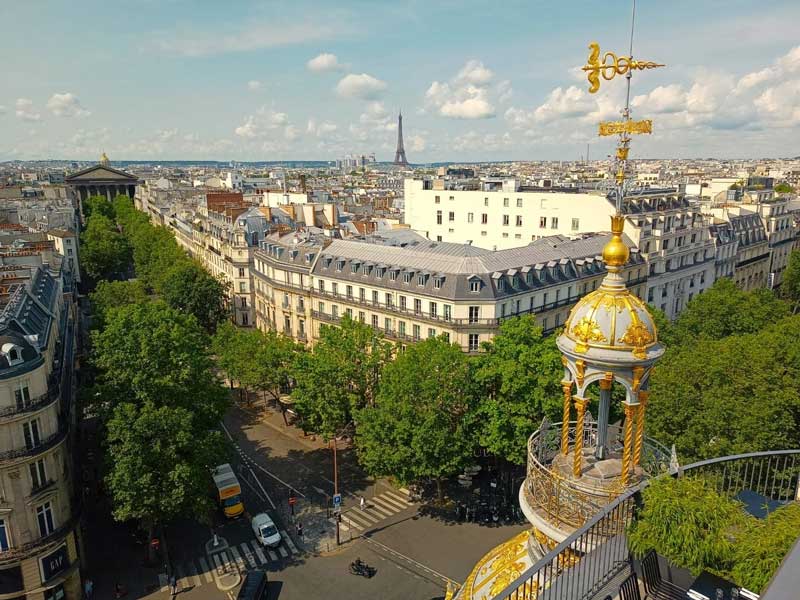
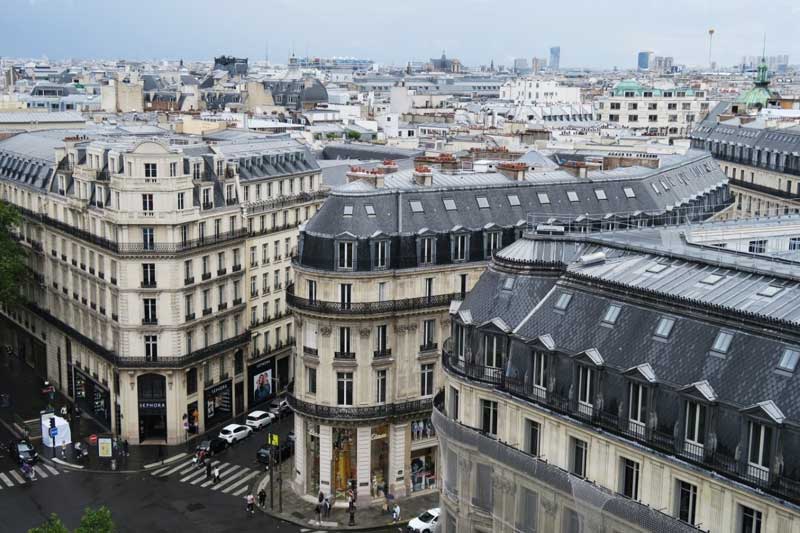
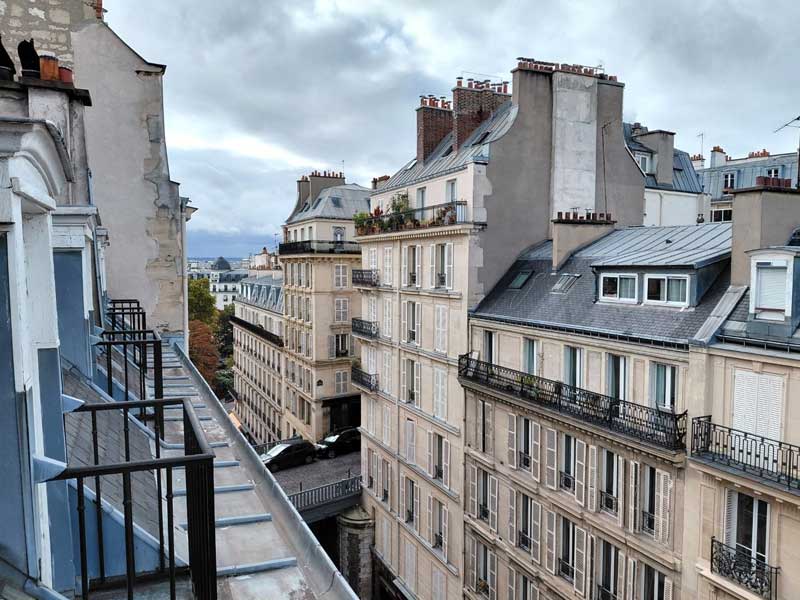
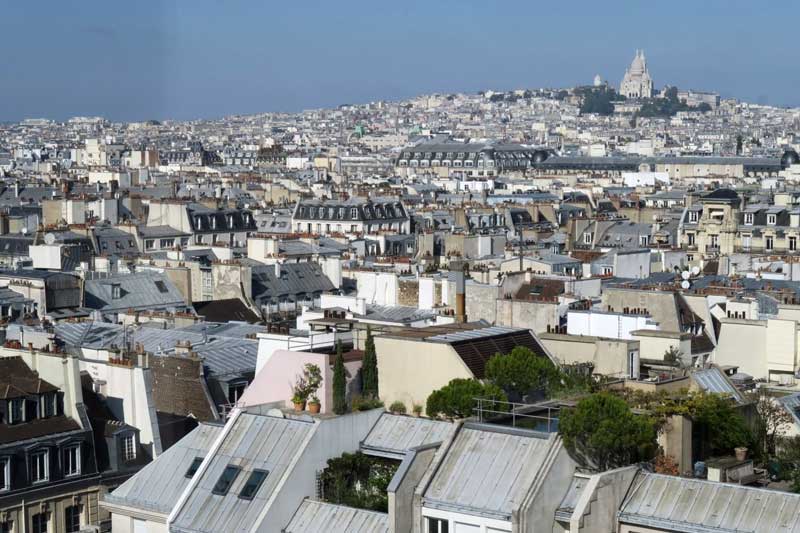
What immediately stands out is the endless sea of rooftops in every shade of gray. Over time, weather and light subtly change the color of the zinc. An estimated 75 percent of Parisian rooftops are made of this material. If you’re lucky enough to stay in a hotel room on a higher floor, you may have a perfect view of these iconic roofs right outside your window.

Why Paris Chose Zinc Roofs
When Haussmann began his massive urban renovation project in the mid-19th century, zinc was chosen as the standard roofing material. The reasons were practical and forward-thinking. Zinc is far more water-resistant than wood or slate roofs, it is lightweight, long-lasting, and significantly more affordable.
Cost played an important role, as Haussmann had strict budgets and limited resources. Another advantage of zinc over slate was that it required less structural support. This made it possible to create small attic rooms beneath the roof, which were commonly used at the time as living quarters for household staff.
From Rooftops to the Café Counter
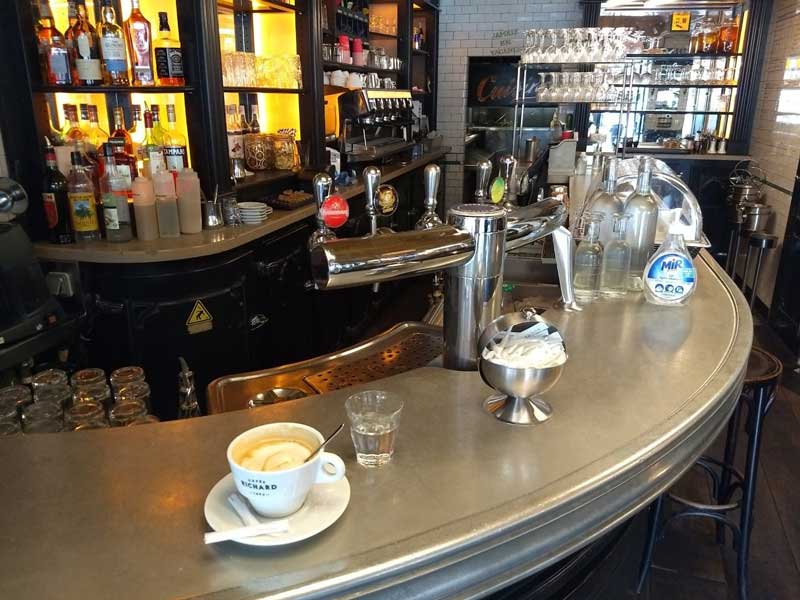
Zinc wasn’t only used on rooftops. As early as around 1800, zinc bar counters became standard in French cafés. In fact, “Le Zinc” became a popular nickname for a café, and the expression “À demain au zinc” meaning “See you tomorrow at the café” is still used today.
This is part of what makes Paris so special: a city that constantly evolves yet somehow remains the same. The success of zinc didn’t stop at rooftops and café counters. The material also proved ideal for everyday objects like buckets and watering cans. After reading this article, you might find yourself looking out of your Paris hotel window with a whole new appreciation.
With thanks to Louis Vendel for this article and the photographs.