
Paris packs an unbelievable number of landmarks into a surprisingly small area. It can honestly feel like a giant theme park, where monuments, museums, grand department stores, leafy parks, and picture-perfect streets lined with classic bistros were intentionally placed close together so visitors can just keep soaking it all in. No wonder Paris is a favorite with travelers from all over the world.
Whether you’re a museum lover, you’re chasing the big-name icons like the Eiffel Tower, the Arc de Triomphe, Notre-Dame, and Sacré-Cœur, or you’re tracking down the prettiest Emily in Paris filming locations to recreate a scene for photos, it doesn’t really matter. Paris is the kind of city where you can enjoy yourself day after day, and the atmosphere feels special almost everywhere you go.
Gare du Nord
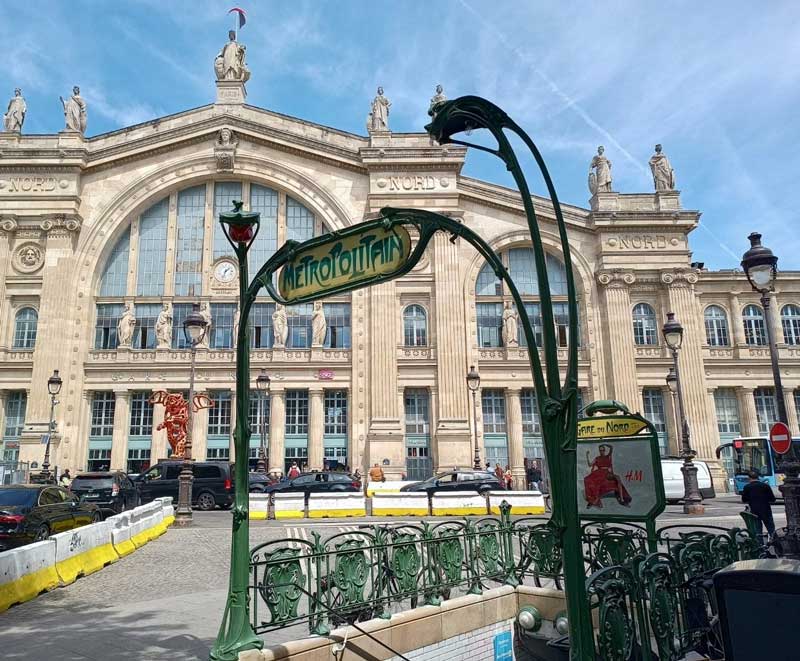
Most Dutch travelers heading to Paris for a few wonderful days in this romantic, varied city arrive at Gare du Nord. When the Eurostar rolls into the platform, the train empties out fast and almost everyone heads straight to their hotel, then returns to Gare du Nord at the end of the trip for the ride home. Many visitors don’t see any other stations, which is exactly why it’s time to introduce another one: Gare de Lyon.
Gare de Lyon
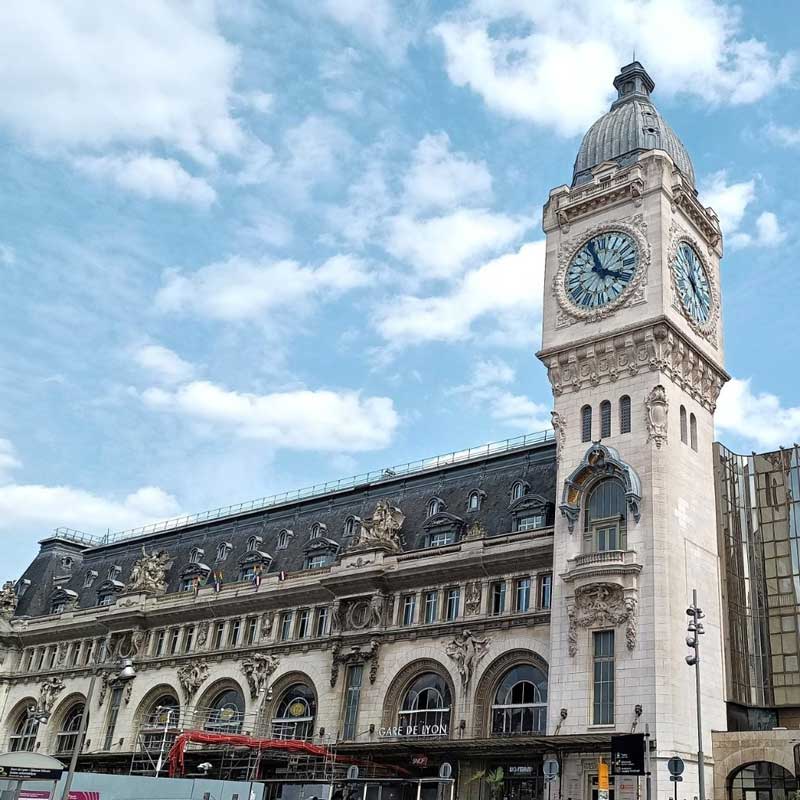
Just like “Gare du Nord” refers to trains coming from (and heading to) the north, “Gare de Lyon” is the gateway for travel toward the south and southeast of France, as well as Italy. It may just be the most beautiful station in Paris, instantly recognizable thanks to its tower (over 60 meters tall) topped with a gorgeous clock.
When Paris hosted the 1900 World’s Fair (the same era that gave the city the Eiffel Tower), the old Gare de Lyon was no longer sufficient, so the current station building was constructed.
The Calais–Méditerranée Express
Starting in 1886, the Compagnie Internationale des Wagons-Lits operated a luxurious overnight train with sleeping cars. It was mainly used by wealthy Britons escaping the cold English winters to spend a comfortable few months on the French Riviera. Before long, the name was shortened to the Méditerranée Express, but it became far better known as Le Train Bleu, thanks to the dark-blue color of its carriages.
This train ran until the early 2000s, but eventually became unnecessary as high-speed rail (the TGV) and more convenient flight connections made overnight train travel less appealing.
Le Train Bleu
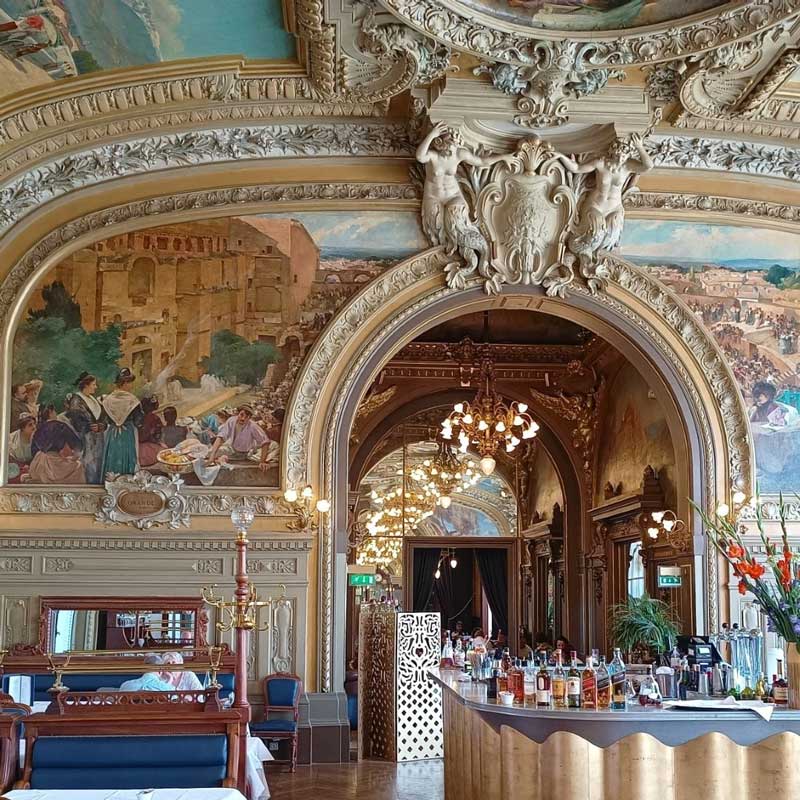
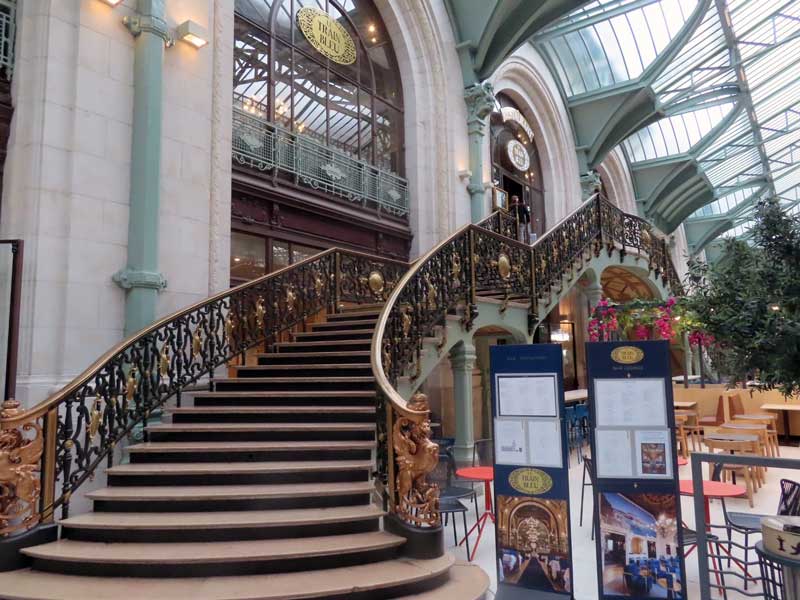
Photo: Parisalacarte
At the same time the new Gare de Lyon opened for the 1900 World’s Fair, a station restaurant was built as well, originally called Buffet de la Gare. As a tribute to the legendary train, the name was changed in 1963 to Le Train Bleu.
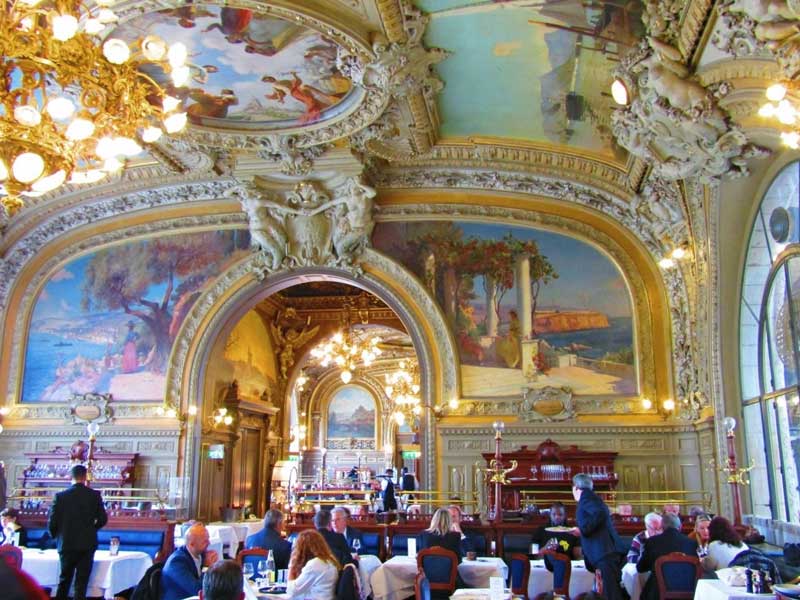
The stunning Belle Époque interiors of the two dining rooms feel downright palace-like. When I visited, I was allowed to take a few photos, because having lunch or dinner there was outside my budget; a meal can easily run well over €120.
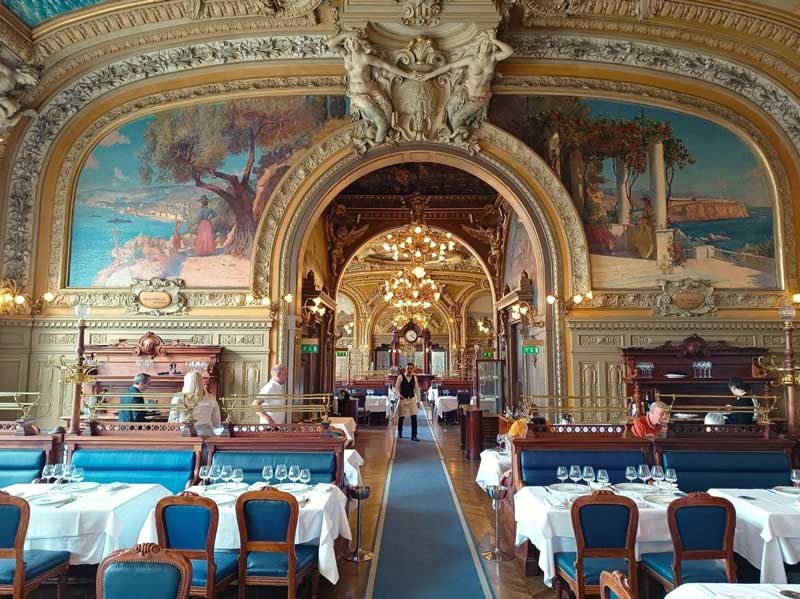
The good news: you can usually step inside as far as the “Wait to be seated” stand, which is enough to admire the wall and ceiling paintings and the chandeliers. It’s absolutely worth a quick look.
Pair your visit with Parc de Bercy
From Gare de Lyon, it’s an easy walk (about 20 minutes) to Parc de Bercy, made up of three connected gardens. In the past, ships unloaded wine barrels here along the Seine and the area functioned as a huge depot. You can still spot traces of that history in the old storage buildings (now mostly cafés and restaurants) and the vintage rails embedded in the cobbled lanes. There’s even a small vineyard!
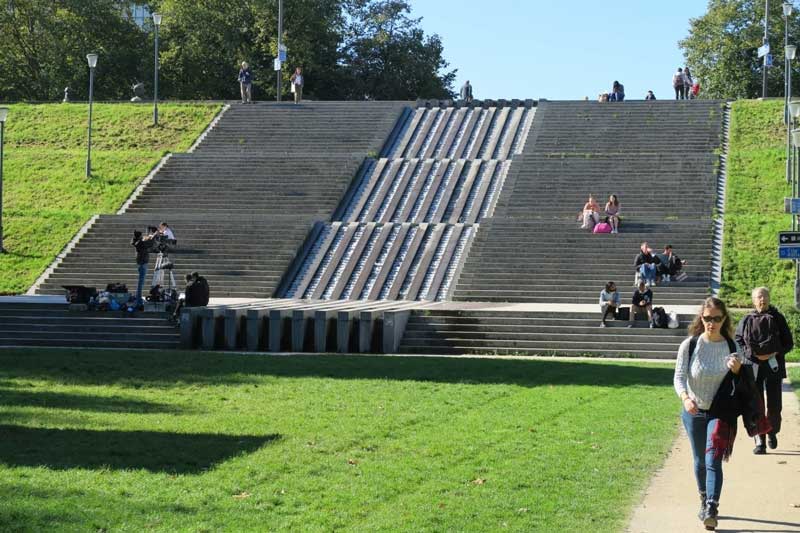
If you walk toward the Seine from the northwest side of the gardens (about 100 meters), you’ll come across a striking waterfall set between two broad staircases, more like an art piece than a typical cascade. Head up the steps and you’ll reach the start of the pedestrian bridge Passerelle Simone-de-Beauvoir, installed about 20 years ago.
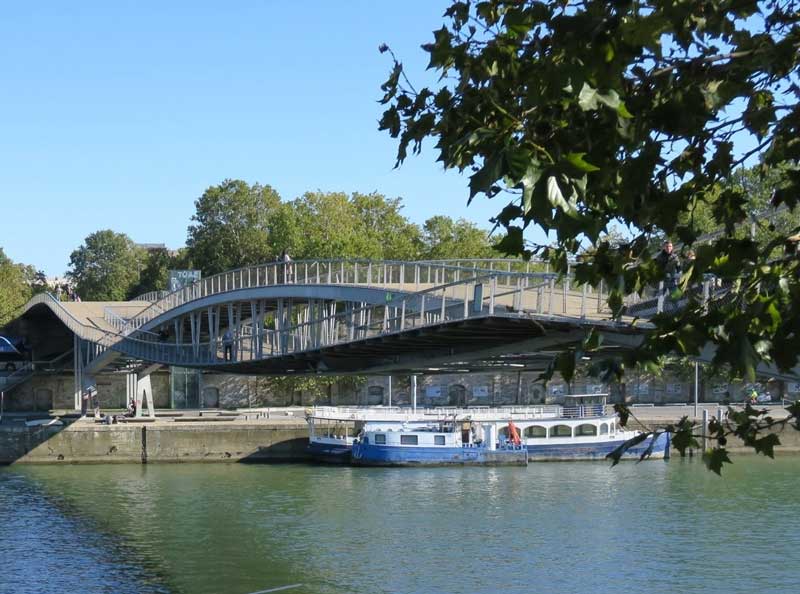
Because of its clever design, the bridge doesn’t need pillars in the Seine, which makes it look like it’s hovering above the water.
Coulée Verte René-Dumont
Another great idea when you leave Gare de Lyon: walk to the Coulée Verte René-Dumont. This park-like route was created on a former elevated railway line toward La Varenne-Saint-Maur. Until 2014, it was known as the Promenade Plantée. Because you’re walking about 10 meters above street level, it’s a surprisingly fun way to look down over streets and buildings, and at times you even pass between buildings.
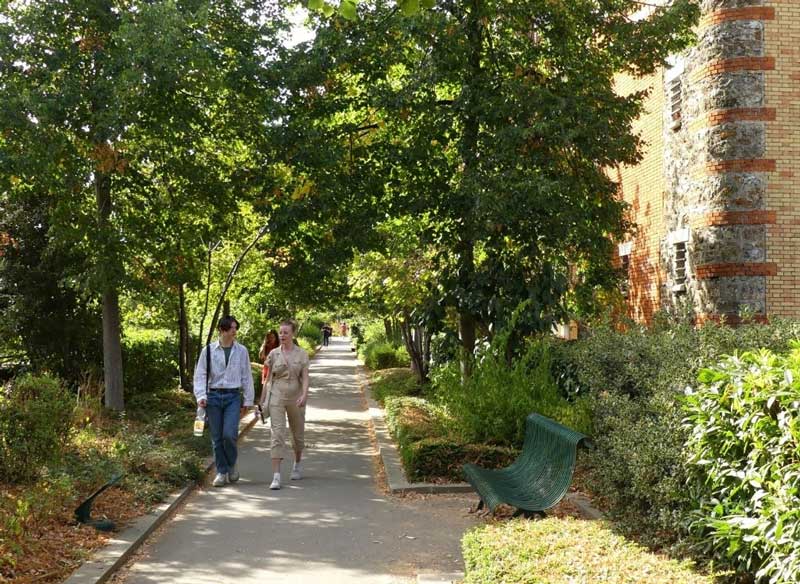
For most of the route, you’re on a long pedestrian path surrounded by lush greenery and you’d barely guess you’re in the middle of Paris.
How to get there
With your back to the main entrance of Gare de Lyon, cross Place Louis Armand. Turn right onto Boulevard Diderot, and after about 100 meters cross to Rue Michel Charles. After about 200 meters, turn left onto Avenue Daumesnil, then cross again after about 100 meters.
Under the viaduct on the other side you’ll find a staircase that leads up to the promenade. There are benches everywhere, perfect for a short break or to simply take in the surroundings.
Walk in the southeast direction. Every so often you’ll find a way back down to street level, where you instantly re-enter the lively rhythm of Paris. Under the arches of the viaduct you’ll also find galleries and places to eat and drink.
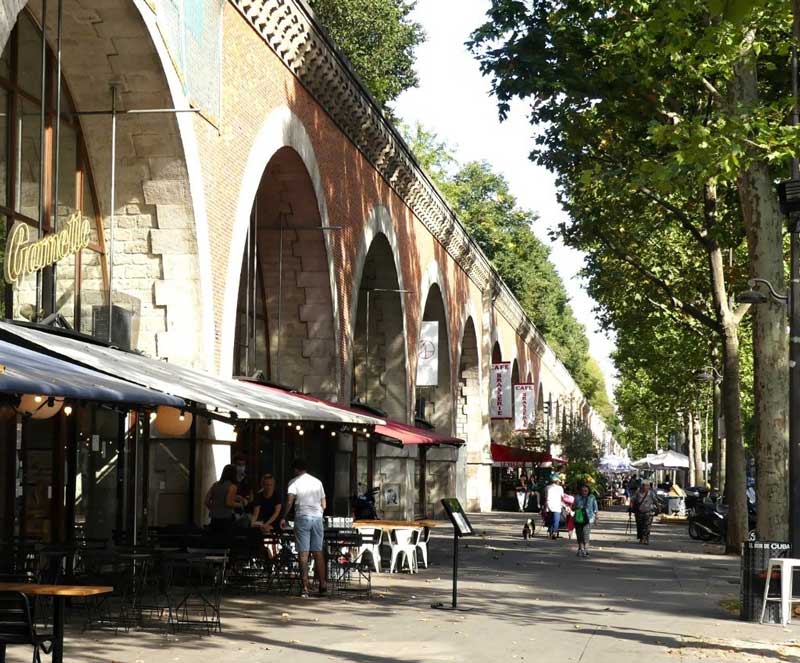
Yet another part of Paris that many first-time visitors never end up discovering.
With thanks to Louis Vendel for this article and the photos.